Keynotes
Fernando Pérez
Monday, October 19 · – · San Jose Ballroom Salon 3 & 4
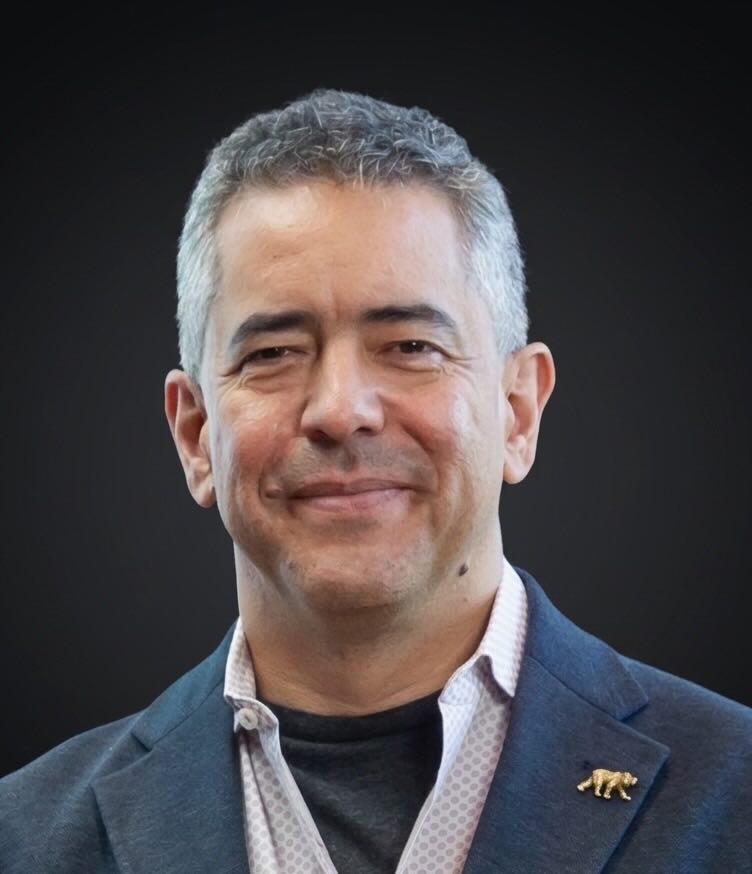
Fernando Pérez is an Associate Professor in Statistics at UC Berkeley, Faculty Scientist at Lawrence Berkeley National Laboratory, faculty director of the Berkeley Institute for Data Science (BIDS), and co-director of the Eric and Wendy Schmidt Center for Data Science & Environment (DSE). His research focuses on the intersection of interactive computing, open science, and AI-based tools for science, with a particular focus on questions related to the earth’s cryosphere, climate change and environmental sustainability. He also co-leads the JupyterHealth initiative that bring open source and AI into healthcare, in partnership with clinical and biomedical researchers. He created IPython while a graduate student in 2001 and co-founded its successor, Project Jupyter. At Berkeley, he also leads computing platforms at the Bakar Institute for Digital Materials for the Planet (BIDMaP). Also an entrepreneur, he is a co-founder and CTO of AIMATX, which uses AI tools to accelerate the discovery of novel materials for the economy of the future.
Fernando regularly lectures about scientific computing, data science and open science. He co-founded the International Interactive Computing Collaboration (2i2c) to provide open infrastructure for modern science and education, and is also a founding member of NumFOCUS. He is the recipient of the 2024 Exceptional Public Service Medal from NASA, the 2024 “Champions of Open Science” recognition from the White House Office of Science and Technology Policy, the 2017 ACM Software Systems Award and the 2012 Award for the Advancement of Free Software from the Free Software Foundation. He is a Kavli Frontiers Fellow of the US National Academy of Sciences (2016). Fernando holds a PhD in particle physics from the University of Colorado at Boulder, which he followed with postdoctoral research in applied mathematics.
Shaping What Comes Next: The RSE Role Today and Tomorrow
Tuesday, October 20 · – · San Jose Ballroom Salon 3 & 4
A panel of experts in position of insight, from national labs, universities and industry, to have a meaningful discussion on the RSE role, its current state, what the future looks like, and how we may shape that future.
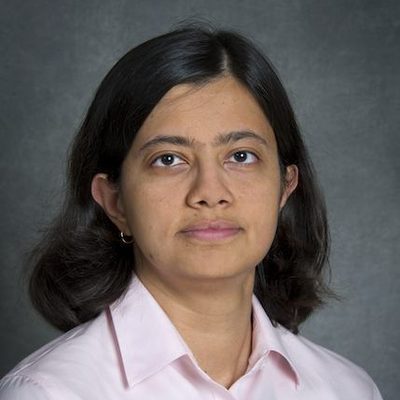 Lavanya Ramakrishnan
Founder, Kinetic Strata; Former Division Deputy in the Scientific Data Division at Lawrence Berkeley National Lab
Dr. Lavanya Ramakrishnan is a computer scientist and senior technology leader specializing in high-performance computing (HPC) and distributed/cloud workflows, complex data systems, AI, and user research. She currently operates through Kinetic Strata, focusing on strategic and technical consulting. Dr. Ramakrishnan recently concluded a 16.5-year career at Lawrence Berkeley National Laboratory, where she served as Senior Scientist and Division Deputy of the Scientific Data Division. Dr. Ramakrishnan’s work has focused on integrating social science with software design and user research, collaborating across various scientific domains. She also served as the Deputy Project Director for the High Performance Data Facility (HPDF). She holds a Ph.D. in Computer Science from Indiana University Bloomington.
 Carol Song
Chief Scientist in Rosen Center for Advanced Computing (RCAC) at Purdue
Dr. Carol Song is the chief scientist of the Rosen Center for Advanced Computing at Purdue University, and serves as Director of Purdue RSE Center. She has more than 20 years of experience in high-performance and distributed computing, and in recent years, dedicated her efforts on research software engineering that bridges domain scientists to advanced cyberinfrastructure. Carol currently leads the NSF-funded Anvil HPC system and StreamCI data framework projects, which supports tens of thousands of researchers, students and science gateways nationwide. She earned her PhD degree in computer science from the University of Illinois Urbana-Champaign.
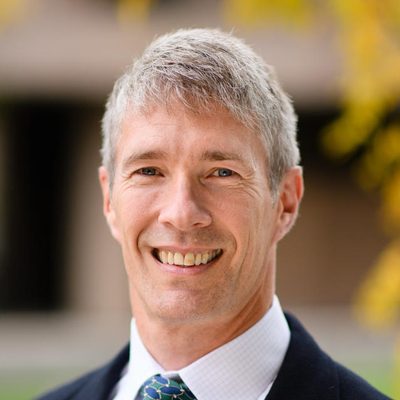 Curtis Hillegas
Senior Associate Dean, Research Computing, Princeton
Curt Hillegas is Senior Associate Dean, Research Computing at Princeton University in the Office of the Dean for Research. He has helped to build a centrally managed research computing infrastructure that includes more than 50 PFLOPS of computational systems, over 100 PB of shared storage, and a world class visualization lab as well as staffing for system and storage administration, programming, training, visualization support, and Research Software Engineering. He has been an active member of the national RCD community having served in leadership positions in the Coalition for Academic Scientific Computation (CASC), a number of generations of what is now the EDUCAUSE Research Computing and Data Community Group (RCD CG), and as a general co-chair for USRSE25. Dr. Hillegas received his B.S. in Chemistry from Lehigh University and his M.A. and Ph.D. in Chemistry from Princeton University.
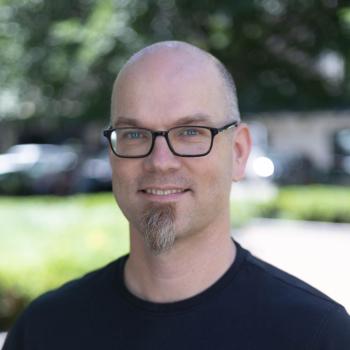 Zach Chandler
Director of Open Source Strategy, Stanford Human-Centered AI
Zach Chandler is the director of the Stanford University OSPO, and of open source strategy in the Stanford Institute for Human-Centered AI. His work includes advocacy for research software as a first-class research output, and he is currently leading a project for HELIOS Open related to how values-aligned external reviewer guidance can support incentivization of open science practices in promotion and tenure evaluation.
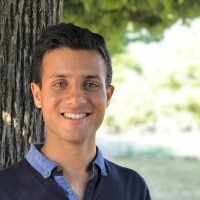 Akshay Agrawal
Creator/maintainer of the marimo open-source project
Akshay Agrawal is a researcher and software engineer who builds open-source tools for scientific computing. He earned his PhD at Stanford, where he researched convex optimization and machine learning, and previously served as a core maintainer of CVXPY and a TensorFlow developer at Google. He is the original creator of marimo, the open-source reactive Python notebook. Today, marimo is downloaded more than two million times per month and is used by dozens of major universities and companies across the world.