US-RSE March 2026 Newsletter
💋 Who Run the Code…? GIRLS! 💋
Published: Mar 12, 2026 by Tinashe M. Tapera (Author & Editor), Sandra Gesing (Editor), Ian Cosden (Editor)
Welcome to the March 2026 issue of the US Research Software Engineer (US-RSE) newsletter! Right off of the heels of Black History Month, this March we are taking the opportunity to celebrate all of the women in Research Software Engineering, because March is Women’s History Month! We hope you find this issue informative and inspiring as we continue to advance the field of research software engineering together.
In this issue:
- 1 🔔 Celebrating Women in RSE! 🔔
- 2 📣 Mark Your Calendars for USRSE’26! 📣
- 3 🤝 Organizational Founding Membership 🤝
- 4 🗞️ Community News 🗞️
- 5 👀 Interesting Events and Opportunities 👀
- 6 📚 Featured Reads, Videos, and Podcasts 📚
- 7 🏃 Get Involved! 🏃
- 8 🧑💼 Recent Job Postings 🧑💼
🔔 Celebrating Women in RSE! 🔔
March is Women’s History Month — or as we like to say in RSE circles: who run the code? Girls. 💻✨
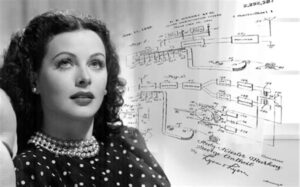
This month, we’re celebrating the women who build, debug, refactor, merge, deploy, and somehow still remember to update the README. Despite often being overlooked, women have always been involved in the evolution of computing. For example, Wi-Fi, the technology you’re probably using to read this article right now, wouldn’t exist if it weren’t for the invention of, “An Extraordinary New Communication System,” called frequency hopping, patented in 1942. The technology was primarily used in warfare, allowing torpedoes to reach their targets undetected in WWII and beyond. The inventor? None other than actress-turned self-taught engineer Hedy Lamarr, earning her a posthumous induction into the National Inventors Hall of Fame, and the endearing title, “The Mother of Wi-FI.”
Fast forward to today, and women continue to contribute significantly to research and engineering. You may remember that in 2019 the first ever image of a black hole was captured by the Event Horizon Telescope (EHT). The lead researcher and algorithm developer on the team was 29-(at the time)-year-old Katie Bouman of MIT, whose work has helped to confirm some of Einstein’s most radical theories about the fabric of the universe itself.
It’s abundantly clear that women have been shaping computational science and research all throughout history, even when history chooses to relegate them footnotes.
Research software engineering is no exception. Women in our community are designing infrastructure, leading teams, strengthening open science, and mentoring the next generation of RSEs. So, this March, take an opportunity to shine a spotlight on women in computing in your life. Make the active choice to amplify voices and celebrate the talent that keeps our science running. Because great research software doesn’t just happen — it’s built by people. And a lot of the time, it’s built by women.
Looking for a fun historical movie to celebrate women in computational science? The famous “Hidden Figures” mathematicians of NASA were a group of women responsible for calculating trajectories that got humans to the Moon whose theatrical movie is a MUST-SEE!
📣 Mark Your Calendars for USRSE’26! 📣
Save the date for USRSE’26: Advancing Science in the Age of AI
We’re thrilled to announce that USRSE’26 will be held at the San Jose Marriott from October 19-21, 2026 in San Jose, California, with the theme “Advancing Science in the Age of AI: Explore how RSEs and collaborators increase research impact during these rapidly changing times.”.
Chairs have been appointed to lead each of the core committees for USRSE’26. These chairs have begun assembling sub‑teams from the pool of volunteers who expressed interest in supporting the respective areas. If you were not selected for a chair position, please stay tuned, as chairs reach out for volunteers for these committee positions.
What’s next?
- Call for Proposals: The Call for Proposals are open! Check out our participate page on the USRSE’26 website.
- Review Submissions: We need volunteers to help review all the submissions we expect to receive. If you’re interested in helping, please fill out the form here.
- Stay Informed: Regular updates will be posted at us-rse.org/usrse26. Please bookmark the page and check back frequently for the latest information.
Your continued involvement is essential to the success of USRSE’26. We look forward to collaborating with you to deliver a vibrant, inclusive, and impactful conference.
📧 Join Our Mailing List 📧
Want to stay updated on all things US-RSE? Join our mailing list to receive direct news about all US-RSE conferences. Sign up here.
💬 Have Questions? 💬
If you have any questions, feel free to reach out to the organizers at usrse26-conference@us-rse.org.
📅 Save the Date 📅
More details about the conference program, registration, and travel information will be coming your way in the months ahead. Stay tuned at us-rse.org/usrse26!
We’re looking forward to seeing you all in San Jose!
🤝 Organizational Founding Membership 🤝
US-RSE envisions a future where Research Software Engineers are universally respected for advancing science, technology, and society through the transformative power of research software engineering. We’re excited to share that the momentum around our Organizational Founding Membership continues to grow! See the list below for the current members (six more are onboarding at the moment).
Organizations that join on or before June 30, 2026, will be recognized in perpetuity as founding members. Founding organizations will also lock in current membership fees through December 31, 2028. Organizational support helps sustain and expand vital community offerings, including the annual conference, monthly calls and newsletter, job board, working groups, and new resources.
Please reach out to Sandra Gesing at sandra@us-rse.org if you are interested in becoming an organizational founding member!
Premier Members
Standard Members
Basic Members
🗞️ Community News 🗞️
Women’s History Month in US-RSE
Here at US-RSE, we continue our commitment to Diversity, Equity, and Inclusion. Our community is strengthened by the wide range of experiences, backgrounds, and perspectives that each of our members brings. This March, we are proud to recognize and celebrate the women in Research Software Engineering whose leadership, creativity, and perseverance support and elevate our work.
If you are a woman RSE, we are celebrating you. Your skill and dedication advance research, support teams, and open doors for others who may be building their own paths in technical fields. Your presence and contributions encourage colleagues and future RSEs, sometimes through direct mentorship and sometimes simply by being visible in spaces where representation has not always been guaranteed.
Women in science, engineering, and computing have faced and overcome significant obstacles throughout history. Despite these challenges, women have driven discovery, shaped computing, and changed the course of research and technology. Today, women continue to innovate and lead across academia, national labs, industry, and open source communities, bringing insight and expertise that strengthen the broader research landscape.
We wish all the women in the RSE community a meaningful and joyful Women’s History Month. May this month bring recognition, celebration, and renewed energy. Thank you for your work, your resilience, and the creativity you bring to the community.
– US-RSE DEI Working Group
Working Group News
The Education and Training Working Group’s next Seminar Series Tutorial is coming up Tuesday March 24, 2-4pm ET (11am-1pm PT)! In Continuous Integration and Continuous Delivery (CI/CD) with GitHub Actions, Andres Rios-Tascon from Princeton University will walk you through using GitHub’s CI/CD tools.
Did you know that we have a community Code of Conduct? Anyone is able to view it in the
#code_of_conductSlack channel, underFiles!
Community Calls
On March 12th, the US-RSE community got together to discuss Legacy Code: Horrors and Successes!
We heard stories from Keith, James, Brad, and more about some of the projects they’ve inherited and how they dealt with codebases with developers in absentia, cryptic comments and functions, and the different edge cases that can come up when handling them.
Our next meeting is scheduled for Friday, April 10, 2026, 1:00 PM EST. We hope to see you there!
👀 Interesting Events and Opportunities 👀
🚀 Supercomputing and the Future of AI: Watch the Full Virtual Exchange Series On-Demand! 🤖
Our exciting webinar series for K–12 classrooms, presented in partnership with Reach the World, has officially wrapped! Over the past ten weeks, more than 840 students joined us to explore the fascinating world of supercomputing, quantum computing, and artificial intelligence.
Now, all episodes are available to watch on-demand along with companion journal articles that bring the topics to life for students, educators, and curious minds of all ages. Together with Reach the World, US-RSE created this virtual exchange to offer a behind-the-scenes look at how research software engineers and data scientists use cutting-edge computing to tackle real-world challenges.
Learn more at ReachTheWorld.org, and please reach out to Sandra Gesing with any questions
🚀 Contribute to the future of DEI in US-RSE
The US-RSE DEI Working Group is seeking input from the community! We’re exploring new ways to foster diversity, equity, and inclusion within our organization and would love to hear your ideas. What would make US-RSE a more inclusive and welcoming space for you and others?
Let’s work together to make US-RSE a place where everyone feels they belong.
If you have suggestions, big or small, please share them in the #dei-discussion Slack channel or reach out directly to the DEI Working Group. Your feedback will help guide our future initiatives and ensure they reflect the needs of our diverse community.
🚀 Simulation Software Engineering Training
In case you happen to be teaching simulation software and related RSE topics, The SSE lecture series from the University of Stuttgart is available for free!
In this series, you will get full access to materials for teaching the software tools used to ensure good software engineering for open-source simulation software such as FEniCS, PETSc, TRILINOS, DuMuX, preCICE, or SU2. This is not a course focused on programming and programming paradigms, but on the techniques and the corresponding tools.
Check out the course homepage here!
🚀 Mentor a Hackathon at Open Hackathons 2026!
Open Hackathon is inviting you to consider serving as a mentor for the upcoming NCAR / NLR / NOAA Open Hackathon scheduled May 5-7th (with virtual engagements meeting teams two weeks leading up to the hybrid event). The hackathon will be hosted at NCAR’s Mesa Laboratory in Boulder, CO. We are also planning to offer travel support for mentors to participate in person if they’d like and would benefit being with hackathon teams physically. A variety of projects will be part of the event, from optimizing/porting Fortran GPU code to Python TF/PyTorch. Some specific libraries or codebases to be used by teams include BerkeleyGW, MPAS, CTSM, AMReX, and Scalapack among others. There’s even one team planning to use Qiskit (if you know any quantum focused software engineers, please reach out).
If you have any interest in supporting this event, please reach out to dhoward@ucar.edu or forward this message to relevant colleagues. If you are already excited to become a mentor, you can directly apply at https://www.openhackathons.org/s/mentor (just mention NNN Hack). Early career or junior mentors are also welcome as we typically pair new mentors with experienced ones as appropriate. You can also engage with the mentor community towards supporting future Open Hackathon events, including NERSC’s and others later this year. See all upcoming events here.
🚀 📣 Call for Papers – SP4Sci’26 Workshop on Scalable, Portable & Productive Scientific Computing
We would like to bring to your attention the SP4Sci’26 Workshop on Scalable, Portable and Productive Scientific Computing, which will be held in conjunction with ACM Computing Frontiers 2026 (Catania, Italy, May 19-21, 2026).
The workshop focuses on programming models, tools, runtime systems, and application experiences that enable scientific software to achieve performance, portability, and long-term maintainability across increasingly heterogeneous computing platforms.
We would appreciate your consideration in submitting a paper to the workshop. We welcome contributions covering (but not limited to):
- Performance-portable programming models and compilers
- Abstractions, DSLs, and frameworks for scientific applications
- Strategies for porting legacy codes to heterogeneous architectures
- Runtime systems and co-design approaches
- Case studies and experience reports from real scientific workloads
Full details, including topics of interest and submission instructions, are available on the workshop website.
🚀 ANNOUNCING THE OSG SCHOOL 2026! 🎓
Could you transform your research with extra computing capacity beyond your laptop or lab computers? Do you need help managing your research computing workloads with automation? If you run or support research workloads that can be described by lists of independent computing tasks, we can help! For example: https://osg-htc.org/services/open_science_pool.html
We are seeking applicants for the OSG School 2026, to be held July 13-17 at the beautiful University of Wisconsin-Madison. Apply by March 20!
The OSG School teaches you how to use high-throughput computing effectively and get a research workload up and running. We use lectures, demos, hands- on exercises, personal consulting with OSG experts, and even roleplaying.
Past participants have come from physics, chemistry, engineering, math, bio and life sciences, earth sciences, agricultural and animal sciences, social sciences, economics, medicine, and more.
Ideal candidates are:
-
Researchers (especially graduate students and post-docs) for whom large- scale computing is a key part of the research process;
-
Research support staff who work with current or potential users of high throughput computing;
-
Instructors (at the post-secondary level) who are ready to integrate high throughput computing into their research based curriculum.
We aim to pay all base travel, hotel, and food costs for applicants whom we invite to attend.
This is an in-person event, and we strive to provide a healthy environment for all.
Learn more at: OSG School 2026 and apply by March 20, 2026!
📢 2026 RDAP Summit Registration Is Open!
📅 When: Tuesday, April 14 through Thursday, April 16, 2026
📍 Where: Virtual
That’s right, registration for the 2026 RDAP Summit is open! We are so excited to welcome you all, virtually, to what we hope will be a great four days of education and community.
As a reminder this year’s theme is “Practical, Personalized, Impactful: Research Data in the Real World,” and celebrates the nuanced work of research data professionals who transform idealistic visions into responsive, community-centered services. We recognize that effective data management isn’t about universal solutions, but about deeply understanding and adapting to the specific needs of diverse research communities. The Summit will run Tuesday, April 14 through Thursday, April 16, 2026, with workshops being held on Monday, April 13.
A detailed schedule, including workshop descriptions, is available on the Summit website.
This year, registration prices are:
- Member - $35
- Student/Retiree/Hardship - $20
- Non-Member - $45
- Workshops - $20 per attendee per workshop (space is limited!)
Registration will close on Friday, April 3, 2026.
We look forward to seeing you all in April!
Register for the Summit here. If you have any questions or concerns during registration, please contact us at summit@rdapassociation.org.
📢 Sixth Chameleon User Meeting
📅 When: April 15-16, 2026
📍 Where: Boulder, CO, USA
The Sixth Chameleon User Meeting isn’t a showcase — it’s a working session where researchers and educators come together to define what AI research infrastructure actually needs. Early registration pricing ends soon — students $50, regular $100 — so don’t wait to sign up at https://www.eventbrite.com/e/6th-chameleon-user-meeting-tickets-1982009337282.
The program includes presentations from Chameleon users and non-users alike, two focused mini-symposia on AI in education and AI for reproducibility, tutorials led by Chameleon staff, networking with our vast community, and a group hike at one of Boulder’s best trailheads.
Register now via EventBrite. See here for further details: Chameleon User Meeting
📢 2026 DASH / IHDEA Meeting
📅 When: October 5-9, 2026
📍 Where: Dublin, Ireland, and virtual
Save the date! 📅
The 2026 DASH / IHDEA Meeting will take place 5-9 October 2026, hosted by the Dublin Institute for Advanced Studies (DIAS) in Dublin, Ireland, with virtual participation supported. 🥳
The DASH (Data Analysis and Software in Heliophysics) and IHDEA (International Heliophysics Data Environment Alliance) meetings bring together scientists and software developers working on data analysis, algorithms, community software, data systems, and standards across heliophysics - from the Sun to geospace and beyond. We invite the full solar and heliophysics data, software, and science community to join us. More details coming soon, including a call for session proposals.
For more information, visit: dash.heliophysics.net and ihdea.net.
Have an event or opportunity you want to promote? Reach out on Slack in
the #newsletters channel!
📚 Featured Reads, Videos, and Podcasts 📚
🎧 Podcast Episodes
-
Schmidt, P. (2026). [EN] ByteSized: How to get your (digital) ducks in a row - with Richard Acton - Code for Thought, . Listen here🔊.
-
Schmidt, P. (2026). [EN] Revealing the structure of crystals and proteins with CrystFEL - Thomas White - Code for Thought, . Listen here🔊.
📇 Blog Posts & Other Reads
- Forston, L., Shanley, L., Berger-Wolf, T.et al. (1970). Grand Challenges for the Convergence of Computational and Citizen Science Research - CCC, . Check it out.
Did you read something interesting this week? Want to share your own
publications in the community? Reach out on Slack in the #newsletters
channel!
🏃 Get Involved! 🏃
US-RSE Working Groups:
- Code Review
- Community Calls
- Diversity, Equity, and Inclusion
- Education and Training
- Group Management
- Mentorship Program
- Outreach
- RSE Empowerment in National Labs
- Testing
- User Experience
- Website
🧑💼 Recent Job Postings 🧑💼
-
Data Systems Software Engineer
📍 Lawrence Berkeley National Lab, Berkeley, CA
🗓️ Posted: 2026-04-04 | Expires: 2026-05-01 -
Research Software and AI Engineer
📍 School of Data Science and Society, University of North Carolina at Chapel Hill, Chapel Hill, NC
🗓️ Posted: 2026-04-04 | Expires: 2026-04-10 -
Data Systems Team Lead
📍 Laboratory for Atmospheric and Space Physics, CU Boulder, Boulder, CO
🗓️ Posted: 2026-04-02 | Expires: 2026-04-16 -
Support Scientist
📍 Science & Technology Corp (STC), Greenbelt, MD / remote
🗓️ Posted: 2026-03-25 | Expires: 2026-05-01 -
Senior Research Software Engineer
📍 Harvard University, Cambridge, MA
🗓️ Posted: 2026-03-23 | Expires: 2026-07-31 -
Research Software Engineer
📍 Center for Open Neuroscience, Dartmouth College, Hanover, NH (Hybrid)
🗓️ Posted: 2026-03-23 | Expires: 2026-05-23 -
Systems Software Engineer
📍 Mellon College of Science - Physics Department, Carnegie Mellon University, Pittsburgh, PA
🗓️ Posted: 2026-03-04 | Expires: 2026-05-04 -
Scientific Applications Programmer
📍 Lynker, College Park, MD (remote possible)
🗓️ Posted: 2026-02-11 | Expires: 2026-04-30 -
Open Source Software Technology Program Developer
📍 Kitware, Inc, Clifton Park, NY
🗓️ Posted: 2026-02-09 | Expires: 2026-05-15 -
Senior Software Engineer
📍 Internet2, Remote
🗓️ Posted: 2026-01-28 | Expires: 2026-04-30 -
Research Engineer / Research Scientist
📍 Aeolus Labs, San Francisco, CA
🗓️ Posted: 2025-12-08 | Expires: 2026-04-30
Other Job Boards
- Research Software Engineering Opportunities in other associations/societies
- Software Carpentries Job Opportunities
- Academic Data Science Alliance Jobs
- High Performance Computing (HPC) Jobs from hpc.social
- SGX3 and SGCI Science Gateways Community Jobs Board
You can learn more about job boards in the #jobs Slack channel!
This newsletter is a joint effort of members of the US-RSE Association.
© US-RSE • 2021–2026 • US-RSE is a fiscally sponsored project of Community Initiatives