US-RSE March 2026 Newsletter
💋 Who Run the Code…? GIRLS! 💋
Published: Mar 12, 2026 by Tinashe M. Tapera (Author & Editor), Sandra Gesing (Editor), Ian Cosden (Editor)
Welcome to the March 2026 issue of the US Research Software Engineer (US-RSE) newsletter! Right off of the heels of Black History Month, this March we are taking the opportunity to celebrate all of the women in Research Software Engineering, because March is Women’s History Month! We hope you find this issue informative and inspiring as we continue to advance the field of research software engineering together.
In this issue:
- 1 🔔 Celebrating Women in RSE! 🔔
- 2 📣 Mark Your Calendars for USRSE’26! 📣
- 3 🤝 Organizational Founding Membership 🤝
- 4 🗞️ Community News 🗞️
- 5 👀 Interesting Events and Opportunities 👀
- 6 📚 Featured Reads, Videos, and Podcasts 📚
- 7 🏃 Get Involved! 🏃
- 8 🧑💼 Recent Job Postings 🧑💼
🔔 Celebrating Women in RSE! 🔔
March is Women’s History Month — or as we like to say in RSE circles: who run the code? Girls. 💻✨
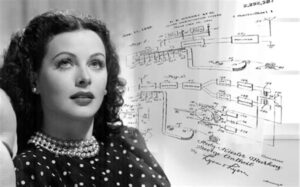
This month, we’re celebrating the women who build, debug, refactor, merge, deploy, and somehow still remember to update the README. Despite often being overlooked, women have always been involved in the evolution of computing. For example, Wi-Fi, the technology you’re probably using to read this article right now, wouldn’t exist if it weren’t for the invention of, “An Extraordinary New Communication System,” called frequency hopping, patented in 1942. The technology was primarily used in warfare, allowing torpedoes to reach their targets undetected in WWII and beyond. The inventor? None other than actress-turned self-taught engineer Hedy Lamarr, earning her a posthumous induction into the National Inventors Hall of Fame, and the endearing title, “The Mother of Wi-FI.”
Fast forward to today, and women continue to contribute significantly to research and engineering. You may remember that in 2019 the first ever image of a black hole was captured by the Event Horizon Telescope (EHT). The lead researcher and algorithm developer on the team was 29-(at the time)-year-old Katie Bouman of MIT, whose work has helped to confirm some of Einstein’s most radical theories about the fabric of the universe itself.
It’s abundantly clear that women have been shaping computational science and research all throughout history, even when history chooses to relegate them footnotes.
Research software engineering is no exception. Women in our community are designing infrastructure, leading teams, strengthening open science, and mentoring the next generation of RSEs. So, this March, take an opportunity to shine a spotlight on women in computing in your life. Make the active choice to amplify voices and celebrate the talent that keeps our science running. Because great research software doesn’t just happen — it’s built by people. And a lot of the time, it’s built by women.
Looking for a fun historical movie to celebrate women in computational science? The famous “Hidden Figures” mathematicians of NASA were a group of women responsible for calculating trajectories that got humans to the Moon whose theatrical movie is a MUST-SEE!
📣 Mark Your Calendars for USRSE’26! 📣
Save the date for USRSE’26: Advancing Science in the Age of AI
We’re thrilled to announce that USRSE’26 will be held at the San Jose Marriott from October 19-21, 2026 in San Jose, California, with the theme “Advancing Science in the Age of AI: Explore how RSEs and collaborators increase research impact during these rapidly changing times.”.
Chairs have been appointed to lead each of the core committees for USRSE’26. These chairs have begun assembling sub‑teams from the pool of volunteers who expressed interest in supporting the respective areas. If you were not selected for a chair position, please stay tuned, as chairs reach out for volunteers for these committee positions.
What’s next?
- Call for Proposals: The Call for Proposals are open! Check out our participate page on the USRSE’26 website.
- Review Submissions: We need volunteers to help review all the submissions we expect to receive. If you’re interested in helping, please fill out the form here.
- Stay Informed: Regular updates will be posted at us-rse.org/usrse26. Please bookmark the page and check back frequently for the latest information.
Your continued involvement is essential to the success of USRSE’26. We look forward to collaborating with you to deliver a vibrant, inclusive, and impactful conference.
📧 Join Our Mailing List 📧
Want to stay updated on all things US-RSE? Join our mailing list to receive direct news about all US-RSE conferences. Sign up here.
💬 Have Questions? 💬
If you have any questions, feel free to reach out to the organizers at usrse26-conference@us-rse.org.
📅 Save the Date 📅
More details about the conference program, registration, and travel information will be coming your way in the months ahead. Stay tuned at us-rse.org/usrse26!
We’re looking forward to seeing you all in San Jose!
🤝 Organizational Founding Membership 🤝
US-RSE envisions a future where Research Software Engineers are universally respected for advancing science, technology, and society through the transformative power of research software engineering. We’re excited to share that the momentum around our Organizational Founding Membership continues to grow! See the list below for the current members (six more are onboarding at the moment).
Organizations that join on or before June 30, 2026, will be recognized in perpetuity as founding members. Founding organizations will also lock in current membership fees through December 31, 2028. Organizational support helps sustain and expand vital community offerings, including the annual conference, monthly calls and newsletter, job board, working groups, and new resources.
Please reach out to Sandra Gesing at sandra@us-rse.org if you are interested in becoming an organizational founding member!
Premier Members
Standard Members
Basic Members
🗞️ Community News 🗞️
Women’s History Month in US-RSE
Here at US-RSE, we continue our commitment to Diversity, Equity, and Inclusion. Our community is strengthened by the wide range of experiences, backgrounds, and perspectives that each of our members brings. This March, we are proud to recognize and celebrate the women in Research Software Engineering whose leadership, creativity, and perseverance support and elevate our work.
If you are a woman RSE, we are celebrating you. Your skill and dedication advance research, support teams, and open doors for others who may be building their own paths in technical fields. Your presence and contributions encourage colleagues and future RSEs, sometimes through direct mentorship and sometimes simply by being visible in spaces where representation has not always been guaranteed.
Women in science, engineering, and computing have faced and overcome significant obstacles throughout history. Despite these challenges, women have driven discovery, shaped computing, and changed the course of research and technology. Today, women continue to innovate and lead across academia, national labs, industry, and open source communities, bringing insight and expertise that strengthen the broader research landscape.
We wish all the women in the RSE community a meaningful and joyful Women’s History Month. May this month bring recognition, celebration, and renewed energy. Thank you for your work, your resilience, and the creativity you bring to the community.
– US-RSE DEI Working Group
Working Group News
The Education and Training Working Group’s next Seminar Series Tutorial is coming up Tuesday March 24, 2-4pm ET (11am-1pm PT)! In Continuous Integration and Continuous Delivery (CI/CD) with GitHub Actions, Andres Rios-Tascon from Princeton University will walk you through using GitHub’s CI/CD tools.
Did you know that we have a community Code of Conduct? Anyone is able to view it in the
#code_of_conductSlack channel, underFiles!
Community Calls
On March 12th, the US-RSE community got together to discuss Legacy Code: Horrors and Successes!
We heard stories from Keith, James, Brad, and more about some of the projects they’ve inherited and how they dealt with codebases with developers in absentia, cryptic comments and functions, and the different edge cases that can come up when handling them.
Our next meeting is scheduled for Friday, April 10, 2026, 1:00 PM EST. We hope to see you there!
👀 Interesting Events and Opportunities 👀
🚀 Supercomputing and the Future of AI: Watch the Full Virtual Exchange Series On-Demand! 🤖
🚀 Contribute to the future of DEI in US-RSE
📢 2026 DASH / IHDEA Meeting
📅 When: October 5-9, 2026
📍 Where: Dublin, Ireland, and virtual
Have an event or opportunity you want to promote? Reach out on Slack in
the #newsletters channel!
📚 Featured Reads, Videos, and Podcasts 📚
📑 Recent Publications
-
Armstrong, M., Carver, J., Milewicz, R.et al. (2026-10). Characterizing the security culture of the research software engineering community: An empirical study, Future Generation Computer Systems 183. Read the Article.
-
Armstrong, M., Carver, J., Milewicz, R. (2026-10). Preparing research software engineers to become security champions: Development and evaluation of a security awareness workshop, Future Generation Computer Systems 183. Read the Article.
-
Carver, J., Cosden, I., Hill, C.et al. (2021-06). Sustaining Research Software via Research Software Engineers and Professional Associations, 2021 IEEE/ACM International Workshop on Body of Knowledge for Software Sustainability (BoKSS). Read the Article.
-
Cosden, I., Holtz, E., Bretheim, J. (2026-10). Designing and implementing a comprehensive research software engineer career ladder: A case study from Princeton University, Future Generation Computer Systems 183. Read the Article.
-
Crouch, S., Hong, N., Hettrick, S.et al. (2013-11). The Software Sustainability Institute: Changing Research Software Attitudes and Practices, Computing in Science & Engineering 15(6). Read the Article.
-
Hasselbring, W., Katz, D., Nieuwpoort, R. (2026-01). Technology Research Software: An Often Overlooked Category of Research Software, Computing in Science & Engineering 28(1). Read the Article.
-
Kamali, A., Colegrove, A., Voelz, A.et al.. Community Software Facility Discovery Workshop Report: Scientific software best practices, tools, and culture, . Check it out.
-
Martina, T., Saad, M., Rucco, C.et al. (2026-10). Empirical evaluation of LLMs capabilities for data pipeline generation on Databricks platform, Future Generation Computer Systems 183. Read the Article.
-
Mineault, P.. Good Research Code handbook, .
-
Posada, E., Holmen, J., Rentschler, A. (2026-09). Oak Ridge Computing Academy: An HPC cluster deployment and management pilot, Future Generation Computer Systems 182. Read the Article.
📇 Blog Posts & Other Reads
-
Sochat, V., Katz, D., Cosden, I.et al. (2026). A kind-of brief shared early history of US-RSE, . Check it out.
-
Wilson, G.. Managing Research Software Projects, . Check it out.
-
Hettrick, S.. A not-so-brief history of Research Software Engineers | Software Sustainability Institute, . Check it out.
Did you read something interesting this week? Want to share your own
publications in the community? Reach out on Slack in the #newsletters
channel!
🏃 Get Involved! 🏃
US-RSE Working Groups:
- Code Review
- Community Calls
- Diversity, Equity, and Inclusion
- Education and Training
- Group Management
- Mentorship Program
- Outreach
- RSE Empowerment in National Labs
- RSE Group Leaders' Network
- Testing
- User Experience
- Website
🧑💼 Recent Job Postings 🧑💼
-
Lead Airborne Systems - Software Engineer IV
📍 NCAR, Boulder, CO
🗓️ Posted: 2026-10-08 | Expires: 2026-10-23 -
2027 Luis W Alvarez and Grace M Hopper Postdoctoral Fellowships
📍 Lawrence Berkeley National Laboratory, Berkeley, CA
🗓️ Posted: 2026-10-07 | Expires: 2026-10-30 -
Lead, Geospatial Artificial Intelligence and Machine Learning
📍 Yale Center for Geospatial Solutions, New Haven, CT
🗓️ Posted: 2026-10-07 | Expires: 2026-10-30 -
Research Scientist I/II
📍 Georgia Tech, Atlanta, GA
🗓️ Posted: 2026-10-01 | Expires: 2026-12-01 -
Fire Weather and Atmospheric Composition Model Developer
📍 The Cooperative Institute for Research in the Atmosphere (CIRA), Colorado State University (CSU), Boulder, CO
🗓️ Posted: 2026-09-29 | Expires: 2026-10-26 -
Research Software Engineer -- Robotics and Simulation Specialty
📍 JHU Data Science and AI Institute, Baltimore, MD
🗓️ Posted: 2026-09-28 | Expires: 2026-12-31 -
Senior Research Software Engineer
📍 New York University, New York, NY
🗓️ Posted: 2026-09-18 | Expires: 2026-12-01 -
Senior Computational Specialist
📍 New York University, New York, NY
🗓️ Posted: 2026-09-18 | Expires: 2026-12-01 -
Research Software Engineer - iBioFoundry, Carl R. Woese Institute for Genomic Biology
📍 University of Illinois Urbana-Champaign, Urbana, IL
🗓️ Posted: 2026-09-16 | Expires: 2026-10-14 -
Research Engineer (Speech AI/ML)
📍 Renaissance Philanthropy, Engineering Hub, Remote/flexible, offices available in New York, Washington D.C., London, and Tokyo
🗓️ Posted: 2026-08-19 | Expires: 2026-10-31 -
Senior Software Engineer, Backend Services
📍 University of Chicago - Globus Search & Insights, Chicago, IL (Hybrid)
🗓️ Posted: 2026-08-14 | Expires: 2026-10-31 -
Research Software Engineer
📍 University of Chicago, Data Science Institute, Chicago, IL
🗓️ Posted: 2026-08-07 | Expires: 2027-01-31 -
Research Engineer (Research Software Engineer)
📍 Center for Scientific Software Engineering at Georgia Tech, Atlanta, GA
🗓️ Posted: 2026-06-17 | Expires: 2026-12-31 -
Research Engineer / Product Manager
📍 Center for Scientific Software Engineering at Georgia Tech, Atlanta, GA
🗓️ Posted: 2026-06-17 | Expires: 2026-12-31
Other Job Boards
- Research Software Engineering Opportunities in other associations/societies
- Software Carpentries Job Opportunities
- Academic Data Science Alliance Jobs
- High Performance Computing (HPC) Jobs from hpc.social
- SGX3 and SGCI Science Gateways Community Jobs Board
You can learn more about job boards in the #jobs Slack channel!
This newsletter is a joint effort of members of the US-RSE Association.
© US-RSE • 2021–2026 • US-RSE is a fiscally sponsored project of Community Initiatives